
What Happened?
Tue, 01/27/2026 - 3:34pm
admin

A history mystery
By:
Gayla Piroutek
Part One of Four
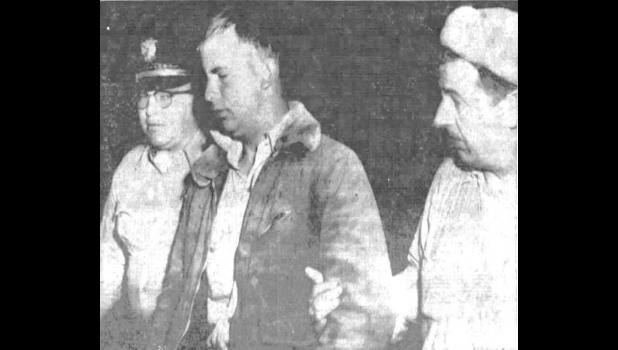
It’s October of 1958 and Alex Stoeser, age 32, sits in the Potter County Courthouse, flanked by his father, Albert, and his brother, Eugene, with a frozen expression. The intense stare showed the grief stamped on his face. Last May (1958), Alex was living on a ranch northwest of Hayes. He had a beautiful 26-year-old wife, three children, and they should have had a new baby in the house by this time. How could it all have changed? Now he was in a courtroom, staring at Robert Mertz, the man who had taken it all from him.
The only time Alex’s expression changed would be when he would stare at the 19-year-old ranch hand that he had hired less than a year ago to help run his ranch. Newspapers said, “The stare is intense and the emotion it seems to express is hatred.” This crime had such notoriety that the court venue had been moved from Stanley County to Gettysburg in Potter County. Dead was Alex Stoeser’s 26-year-old wife, Irene (Patton) Stoeser and her unborn child, plus their 5-year-old daughter, Linda. Their son, 3-year-old Mike, was alive, partially paralyzed, with a bullet in his head. Their son, Jimmy, just less than two, was asleep, taking an afternoon nap in an upstairs bedroom.
The packed courtroom would listen to testimony in this case against Robert Mertz who had recently turned 20. He would only be tried for the death of Alex’s wife, Irene. No reason was given why no charges were brought for 5-year-old Linda’s death, or the serious injury to 3-year-old Mike. The jury of seven women and five men were given four choices: Guilty of Murder; Guilty of First Degree Manslaughter; Not Guilty by Reason of Insanity; and Innocent. The verdict came after six hours and 5 minutes of deliberation. Read along to decide how you would have voted, if you had been on that jury.
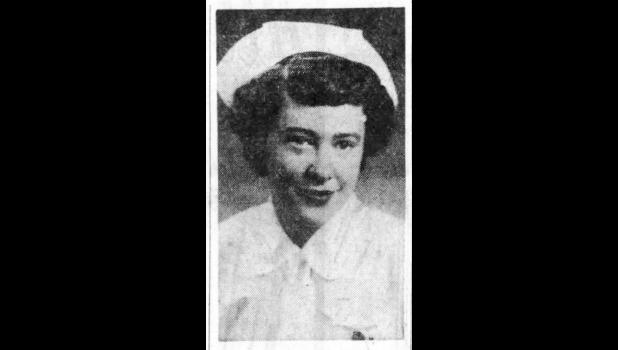
The Alex Stoeser family awoke on May 13 to a nice spring day. There were kids to feed and chores to do in the morning. The mother of the family, Irene, was the daughter of Patrick and Mabel (Grotta) Patton and sister to Thelma Heltzel, Kathy Pfeifle, and Johnny, Philip, and Robert Patton. She was a double cousin to Leo and Lyle Patton of Milesville. After the noon meal, the baby, Jimmy was put down in his crib for a nap in the upstairs bedroom. Linda and Mike might have been resting in a downstairs bedroom and on a couch, while their mother, Irene, cleaned up the kitchen and started on some project. Alex was thinking of hay season coming and a few crops that would need planting. He needed a few machinery repairs, and he could get what he needed at Hayes, only 6 miles or so southeast of the ranch.
Alex would spend some time visiting with some neighbors in Hayes while picking up the supplies he needed. Hayes was a community, named for early settlers, John and William Hayes. Along the Old Deadwood Trail, Hayes was established as a Road Ranch or way station for travelers, back in the days of wagons, buggies and stagecoaches. In 1958, Hayes would have had multiple stores, repair shops, a gas station, a large school, a community hall, and city and county maintenance shops.
While Alex was in Hayes getting repairs, Robert Mertz, Alex’s hired hand, drove the Stoeser car to the Midland Service Station, operated by Richard Bentley. According to Bentley’s report, Mertz “skidded the Stoeser car to a halt at his station. Mertz was shaking and half crying.” Mertz said he had shot someone. He was asked if it was Alex, and he had replied, “No.” Law officers were called, with Stanley Jacobson, Deputy Haakon County Sheriff, as the first to arrive. Mertz surrendered to him stating something about trying to shoot a rattlesnake, and also shooting Mrs. Stoeser. Mike Schofield, Midland town marshal, assisted in taking Mertz to the Philip hospital. In a statement to Mel Sonnenfeld, an agent for the DCI, Schofield said that Mertz was at that moment, “very excited and kind of wild.” Schofield said Mertz asked him, “Will they hurt me?”
Claude Crawford of Midland was at the service station when Mertz drove in. He assessed Mertz as hysterical. Claude Crawford and Floyd Sammons (late father of Arlyne Markwed) went to the Stoeser home and discovered the tragedy. Irene was dead, but both Linda and Mike were alive, as was Jimmy who was unhurt. The children were wrapped in blankets and sped to a Pierre hospital with an uncle. They stopped in Hayes to tell Alex, who collapsed on the spot. Alex rode with the children on to the Pierre hospital where Linda was pronounced dead on arrival, with a bullet wound in her right temple. Alex was admitted to the hospital overnight to recover from the shock of everything.
Little Mike needed more help. The Pierre police said that several thunderstorms over the area between Sioux Falls and Pierre made it inadvisable to use a light plane to bring the critically injured boy to Sioux Falls. The Air National Guard, stationed in Sioux Falls, was called to come get Michael and take him to a Sioux Falls hospital. Miss McCristy, a Pierre nurse, accompanied Mike on the flight. The Sioux Falls doctor said the bullet was not an immediate problem. The .22 caliber slug went in near the top and back of the right side of Mike’s head. It passed through the back part of the head and lodged in the left cheekbone. Mike would spend the next three weeks in the hospital. He had paralysis on half of his body. Over the years, a determined little boy got more use out of his body. He walked, with a bit of a limp, and his hand and arm were not perfect, but he lived a good life. He died from a four-wheeler accident in 2010 at the age of 55.
This Stanley County tragedy happened on a Tuesday, and the funeral for Irene and Linda was held in St. John’s Catholic Church in Ft. Pierre on Saturday.
As the State’s Attorney said, “Here we have a happy family in a lonely farm home. The husband was away. Here was a pretty fair looking young man. Here was a good looking young woman out in this lonely place. There has never been any question about Mrs. Stoeser But, knowing the defendant and his background, who are we to say what may have happened that May afternoon?”
Next week we will start stepping through all the evidence to see what we think might have happened.
Part Two of Four
After the tragedy detailed last week, two were dead, Alex Stoeser was in the Pierre hospital in shock, and his 3-year old son, Mike, was in a Sioux Falls hospital, partially paralyzed, with a bullet in his cheek bone. Little Jimmy, the baby, was the only one unharmed as he had been taking his afternoon nap upstairs in his crib.
Consulting a few folks and newspaper clippings from the Rapid City Journal, the Argus Leader, The (Huron) Daily Plainsman, and the Lead Daily Call, I’ve attempted to recreate the details of this awful incident.
The man who pulled the trigger the afternoon of May 13, 1958, was Robert Thomas Mertz, a 19-year-old who had worked as a ranch hand for Alex Stoeser for almost a year. He had come from St. Louis at 16 with a combine crew. He said he was an orphan, so he worked for several ranchers, usually boarding with them. That was his arrangement at the Stoeser ranch. Right now, Mertz was upset and in the Philip hospital.
This tragedy happened around 3 pm at the Alex Stoeser ranch, six miles northwest of Hayes. Authorities got involved after Robert Mertz drove the Stoeser car to the Midland Service Station. Several folks who were at the station, including Claude Crawford and Floyd Sammons, saw Mertz arrive, jumping out of the car and saying, “I just shot a person.” Crawford and Sammons drove out to the Alex Stoeser ranch, to find Mrs. Stoeser dead on her bed, with Linda beside her, shot, but still alive. Both were in the first floor bedroom. Mike was found on a sitting room couch off the bedroom. They saw blood on the kitchen floor and on the screen door.
Haakon County Sheriff Harry Burns got to the ranch a little later. He described the scene, “It seemed there was blood all over the place. The bed and mattress were all bloodstained.” Burns found eight empty cartridges. There were rifle slugs in the house and in Mrs. Stoeser’s body. Stanley County Coroner, C. M. Weirauch, said Irene had five bullet wounds: in the head, in the right arm, through the right side, and twice in the abdomen. She was expecting another child in July or August. It might have been possible that one the bullets had passed through the mother and into Linda…maybe. Was Mike’s head wound just a wild shot, or was it intentional?
Later, chief agent Rol Krebach examined the bullet holes in two doors. The holes in the inside kitchen door were fired inside the house while the hole in the outside screen door was fired from the outside. There were five entrance wounds and two exit wounds in Mrs. Stoeser’s body. There was a double trail of blood found inside the kitchen with the first half appearing to start inside the kitchen door which leads to the entry room. It went from there to the outside screen door and then back through the kitchen across the entry room and living room into the bedroom where Mrs. Stoeser’s body was found.
In the Stoeser car, driven by Robert Mertz, were a semi-automatic rifle and two boxes of cartridges.
The only survivors were Mike, age 3, and Jimmy, almost 2. They couldn’t tell the story, so we are relying on the story that Robert Mertz told after his capture. Mertz was held in the Philip hospital for four hours under sedatives before being brought to Ft. Pierre by Philip Police Chief Gay Moses and Midland Marshall Mike Schofield, for questioning by Mel Sonnenfeld of the DCI (Division of Criminal Investigation).
Mertz, a burly 200 lb. youth with dark blond hair, was questioned at length until after midnight. Mertz’ statement said that he was hauling wood when he saw a “rattler.” He went to get a gun and some shells from his room in the Stoeser house. He got shells and went onto a porch to load the weapon. He kicked a shell into the chamber.
Then Irene started to close the door between the kitchen and the porch. The gun went off. He said it was an accident. “I think the bullet hit Irene in the head,” from Mertz’ statement. Mertz said that at that point, Irene said, “Bob, get help.” She came out on the porch and told Mertz to start the car. Then she went back inside, saying she would get the kids. Mertz words, “I followed her in. For some reason I kept following her around and pulling the trigger. She went to the bedroom. Linda was on the bed. I think I pulled the trigger a couple of times in the bedroom. The first time I shot her I kept pulling the trigger. I don’t know how many times I shot her. I went out and started the car like she said. I left to get help.” He said he filled the car with gas before he drove to Midland.
Part Three of Four
Who was Robert Thomas Mertz? It was assumed that Mertz enjoyed working at the Stoeser ranch. A motive was not presented as to why he would do this terrible deed. No evidence came forth that he was unhappy doing chores around the Stoeser ranch. What caused him to go on this shooting spree? Was he jealous of this happy family, or were there mental health issues? Was he really just afraid of a rattlesnake?
Mertz was born as Robert Brim. He had been taken away from his natural mother for neglect and had been in four foster homes by the time he was four. Then he was put in the Mertz home where favoritism was shown a sister who was adopted with him. He was punished by such measures as having his fingers squeezed in a door and having to wear a diaper over his coveralls on the streets of St. Louis, Missouri. He was sent to reform school at 13 for stealing from the service station run by his foster father. He ran away from reform school several times.
He had an abnormal fear of reptiles and bugs, starting when very young. At trial, Mertz’ defense attorney showed a psychiatric examination of Mertz in 1954 at age 15, probably assessed during his stay in reform school, which showed that Mertz needed help for periods of depression in which he sometimes acted explosively. After he ran from reform school, he worked for two families near Speed, Kansas, before joining a combine harvest crew heading north. This harvest crew brought him to the Midland, South Dakota, area where he worked at several places before his employment at the Alex Stoeser ranch.
After the tragedy on Tuesday afternoon, Mertz spent four hours sedated in the Philip Hospital. Then he was taken to Ft. Pierre where he was interrogated at length by Mel Sonnenfeld, and Mertz gave a statement as to what happened. He was held in the Stanley County jail until the coroner’s inquest at 10 am on Thursday. Mertz appeared in court still wearing the boots, dirty Levi’s, and armless gray shirt he had been wearing on Tuesday afternoon. Rol Kebach, chief agent for the DCI, stated, “I don’t know how he could shoot accidentally that many times.” State’s Attorney Ramon Roubideaux filed the charge after a three-member coroner’s jury ruled after only 10 minutes that Mrs. Alex Stoesser died feloniously at her ranch home. When Mertz was asked if he wanted an attorney, he responded, “I don’t know.” Circuit Judge O. K. Whitney appointed Clair “Tex” Ledbetter as his defense counsel. Mertz winced and stifled a sob when the word “murder” was read from the complaint.
On Friday, Mertz was transferred to the Pierre hospital for medical care, while still under guard. Mertz seemed unable to talk with his lawyer, seemed irrational, and on the verge of complete collapse. By Monday, Mertz returned to the Stanley County jail. To assure a fair and impartial trial, Judge Harry E. Mundt from Mobridge, SD, was appointed by the state Supreme Court to hear the trial. Both attorneys agreed that Mertz should be sent to the Yankton State Hospital for mental examination. Mertz was at that facility from August 6 through September 11.
The trial began in Gettysburg on Monday, October 27, 1958, starting with the selection of a jury. Stanley County Sheriff Frank Trople brought Mertz to Gettysburg, where Mertz lodged at the jail in the Potter County Courthouse basement. He wore canvas loafers, blue jeans, and a red and black plaid shirt. He was pale, after spending five months behind bars. Many potential jurors were questioned, with many excused because they knew the Stoesers, or they had already formed an opinion to decide the case, or they didn’t believe in insanity, or they couldn’t hear. Finally the judge dismissed all jurors over the age of 70.
A capacity crowd of 100 gathered in the courtroom when the actual trial began the next day with Mertz pleading not guilty by reason of insanity and the prosecution seeking a murder conviction and the death penalty.
Mertz sat with his long legs crossed, immediately behind “Tex” Ledbetter, his defense counsel. Robert (Bob) Mertz “joined in the laughter when questioning provoked mirth from others in the courtroom.” The Stoesers sat with solemn faces. Alex’s face had the same grief stamped on his face, virtually unaltered from the evening he had learned of the deaths of his family.
After discussion, the statements Mertz made to the law on the night of the incident, were admitted. Richard Bentley, operator of the Midland service station told of Mertz arrival there saying, “He’d had an accident and wanted to get ahold of Mike Schofield.” (Midland Chief of Police) Bentley said Mertz was shaking considerably, trembling and breathing heavily, and held his hands up in an unusual fashion. Mertz’s story about the rattlesnake was repeated, as was a tally of the evidence found out at the ranch house and in the Stoeser car. Mertz said he had not killed the snake and no snake was ever found. Part of the statement read, “The first time I shot her (Mrs. Stoeser), I kept pulling the trigger. I don’t know how many times I shot her. I might have missed.”
The next step for prosecutor, Ramon Roubideau, included testimony from Philip Police Chief Gay Moses who had accompanied Mertz from the Philip hospital to Ft. Pierre. Moses said that Mertz was “afraid and scared” but not hysterical and was in complete control of his faculties and aware of what was going on. Moses went on to say that, “Mertz shied away from the nurse when she brought out the wheel chair” and Mike Schofield led Mertz to the wheel chair. Moses also thought Mertz was trembling at times and clutching Schofield’s arm.
Floyd Sammons, Claude Crawford and Haakon County Sheriff Harry Burns described the scene at the Stoeser ranch. The Pierre mortician/coroner described the wounds. Mike Schofield testified that while he was with him, Mertz was shaking and sobbing, but had sufficient control to talk and walk by himself. None of these testimonies or evidences invoked a noticeable reaction from Mertz. During the recess, Mertz chatted pleasantly with his guard about western novels, hunting and the time he had spent at the Yankton State Hospital.
The next day, State’s Attorney Ramon Roubideaux called to the stand, Dr. F. W. Haas, Yankton psychiatrist, who described Mertz as a “definite schizoid personality, but not yet psychotic,” adding that “Mertz has an IQ of 111, but he suffers from emotional flatness or emotional paralysis.” Mertz answered questions rationally and displayed no delusions, but “he seemed incapable of feeling any warmth or emotion.” Haas, who was a former superintendent at the Yankton State Mental Hospital, said, “I’m compelled to say he knew what he was doing.” Haas testified that Mertz was sane at the time of the shooting and was capable of judging right from wrong. He did say there was “a little question in my mind if Mertz was not so excited at the time of the shooting, he didn’t stop to consider right from wrong.” A second psychiatrist, Cecil W. Baker, also attested that Mertz was sane at the time of the shooting.
The prosecution rested. Under state law, the defense must prove insanity, as the defendant is always considered sane.
Part Four of Four
The defense called James Reinhardt, a criminologist and professor at the University of Nebraska, who had been appointed by the court to examine the mental state of Mertz. Reinhardt had examined Mertz in June and October, as well as the past two days in court. He testified that Mertz “had no idea of the importance of his act or whether the act was right or wrong…” Reinhardt said, “Mertz had a mental disorder which he described as a form of divorcement from reality, a condition in which the person lives in a world of fantasy.”
Three witnesses from Speed, Kansas, testified on Wednesday that Mertz had lived with and worked for them and had an abnormal fear of snakes. They said he had recurring periods of depression. Mertz had lived at the Easley’s from May to July of 1954 and from October until the spring of 1955. In August and September of 1954 he was at the nearby Green farm. Mertz showed no interest when the Kansas folks testified, even though their testimony brought tears to the eyes of some in the courtroom.
Defense Attorney Ledbetter said that Mertz had been suffering from a “progressive mental disorder” from early childhood and for a considerable time has lived in a world of fantasy. Mertz then and now displays an emotional indifference “which approaches emotional paralysis.” He went on to say that at the time of Mrs. Stoeser’s death, Mertz “acted in response to fears beyond his control and so overpowering that he knew not his acts.
Mertz watched intently when the attorneys gave their closing arguments, but when they had completed, he shrugged, yawned, and lit a cigarette for himself and his guard.
After a six hour deliberation, the jury returned with “guilty of manslaughter.” Mertz could have been sentenced to as little as four years, but Judge Mundt said, “You committed a terrible crime. I feel sorry for the Stoeser family. I feel it my duty to see that you never again have an opportunity to cause grief to anyone.” Mertz was sentenced to life in the penitentiary. This was Friday, November 1, 1958. On Saturday, Sheriff Frank (Bud) Trople of Stanley County took Robert Mertz to Sioux Falls where he spent the rest of his life behind bars.
Alex Stoeser had at least one more “bump” in his life. On August 24, 1960, a terrible storm with lightning, hail, rain, and terrific tornado-style winds roared through the Hayes area. The Sandal’s, the Bentley’s and Roseth’s all lost barns, windbreaks, outbuildings, and hay stacks. It was the Jacobson Bros., living on the old Ernest Place, who lost 150 chickens that died. The Butte Schoolhouse was moved from its foundation. But, the wind also blew once again through the home of Alex Stoeser. This time Alex was in the barn when it blew away with Alex inside. Lightning fires were extinguished with the 2-3 inches of rain that fell, and Alex landed in the Pierre hospital with an injured arm and bruises. Unlike the previous tragedy, over time, all would be healed.
Alex Stoeser would later marry Lucille Lydia Englehart in 1970. Alex J. Stoeser died in 2000 at the age of 74. Lucille died in 2015 at the age of 89. Mike Stoeser lived to be 55, dying in 2010 in a 4-wheeler accident. Two-year-old Jimmy, who was physically unharmed, is now 69 years old and living in the Ft. Pierre area.
Robert Brim, sentenced to life in prison in 1958 for killing Irene Stoeser at her farm near Hayes, South Dakota, died Jan. 7, 2017, at 79 years of age, in a Sioux Falls hospital after a lengthy illness.
In 1958, Brim was 19 and using the name Robert Mertz, a name that is listed in state prison records as Brim’s alias. He was “pudgy,” and a “self-described orphan,” according to news reports at the time of the crime. Mertz was the name of one of his foster parents.
Mertz had pled “not guilty by reason of insanity”, but he was convicted of manslaughter and sentenced to life in prison on Nov. 1, 1958.
Brim made his first formal request for parole in 1993 and it was denied. He then appealed to the state Supreme Court, saying that at his 1958 sentencing he was denied his right to have a parole eligibility date assigned. His appeal was denied. Robert Brim (Mertz) had served 59 years and two months in prison, when he died in 2017, at 79 years of age.
This was a gruesome tragedy. We need to remember and read history to help avoid tragedies in the future. This was a horrible event for the Stoeser family. Life ended early for Irene, her daughter and her unborn child. Two children grew up without a mother. Mike would deal with some physical limitations for the rest of his life. Jim would never know his mother. Two grandmas became mothers again, raising these grandchildren. Alex’ life changed forever.
Before working for the Stoeser family, Robert Mertz, about 17 or 18, worked at the farm of Otis and Mary Foland down near Ottumwa. A story passed along in the Foland family was that Robert Mertz was mean to the three Foland boys who were in their teens and twenties. One day, Otis Foland came home to find that Mary Foland no longer wanted to deal with Robert Mertz. She told her husband, Otis, that Robert must be fired. So Robert was headed down the road to find new employment.
And what of Robert Mertz? Did he deserve prison, or had that become the only life he was suited for? Perhaps in 1958, Mertz’s sentence to prison was the only possible outcome. It was too late to bring back the Stoeser family. It is not known what Mertz was thinking, or what emotions took over just at that time. Was there really a rattlesnake, and was this truly a fear that Mertz couldn’t control? Had anyone in the Midland area seen any sign that Mertz could be violent? Looking at the entirety of the evidence, it seems unlikely that Mertz wanted to punish the only family who had shown concern for him. The Stoesers had moved him into their home. There truly is no excuse for his actions, but the cards were stacked against Mertz. Born in a dirt poor family in 1939, just after the Great Depression, what was his mother to do? Did he have a father? Were either of them alcoholics? We know that they were poor. He had an IQ of 111. Back then, could a kind family or caring teacher have made a difference in his life?
The foster care systems and reform schools have certainly gotten better than when Mertz was availing their services. Understanding mental health has improved with better medicines and counseling. With better care homes and better treatments, we can hope that another tragedy like this one could be avoided. We are still left with, “What happened?”
